
Aloha
or is it hello?

I knew how to dance before I knew my name.
I could watch my parents sway their waists to the beat of the drums and dig their legs further into the sand with each step. Whenever the drummers burst out the drums, it was a call to rejoicing. Almost immediately, squeals of delight will follow, and residents will run to shore, their peals of laughter accompanying them. I grew up watching people teach me to dance without speaking but simply moving. While taking baby steps, I waddled to the beat.
As a toddler, I would bounce, twirl, wobble, and stomp my feet, often unable to keep with the rhythm. But it didn’t matter, for it was the only way I knew to show my excitement.
When I got older, I learned that dancing the tango was the way to speak multiple languages at once. Ranging from passion to longing, down to nostalgia, a hint of heartbreak, sometimes seduction, and my personal favorite, storytelling. When I finally mastered the art of putting my right foot backward to begin the dance, I understood how bilingual people felt. The pride of being able to communicate freely, and fit into all boxes without any restrictions.
Alas, I could speak freely!
It didn’t take long for me to learn that I might be multilingual after all.
When I had to move out of my parents’ house to a different city and experience a different culture, I lost my ability to tell when people were happy without having to ask them.
Nobody danced, instead they scampered in different directions, and only on rare occasions did they stop to wave or offer a smile. And even those ones are usually curt and polite, so much so that it was difficult to tell which was genuine or just a polite gesture.
Although, they didn’t communicate how happy they were, they said something else without speaking; they were always in a hurry. A hurry to go somewhere or a hurry to leave. You could tell just how much of a haste they were in by the speed of their footsteps.
For example, when people take long strides, then they might have a sense of urgency or a moderate rush.
If it’s a sprint then it’s safe to say they don’t have much time or might be preparing for a marathon. Strolls show little or no hurry, and it’s usually just a casual walk. While brisk walks have a slightly increased pace with more energy.
Whenever I stumble across someone sprinting, I hear what they don’t say, “Get out of my way” and I immediately take a step to the side to let them through to avoid a two-man pileup. The longer I stayed there, the more I learned to communicate accordingly, hoping that others would get the message. If I was almost late for a class, I forgot other forms of walking and just ran instead.
My friend who couldn’t speak was the best communicator while welding sign language. She could communicate more efficiently than I could write or even run!
She would sign all the letters of the alphabet in a breeze. When she was being mischievous, she would arch her brows in question, if she was nervous, she would bite her lower lip, and if she was upset, her arms would be crossed and her brows furrowed.
The same way my lecturer would stride in and stand in front of the class while tapping his feet. It was his way of telling us to hush and get our acts together so he could begin. It worked all the time, because he would pair it with a sullen expression and his mouth in a thin line. I always wondered if he was always as impatient as he tried to communicate with us.
Sadly, facial expressions couldn’t be relied on, all the time. Especially because of people who managed to keep straight or poker faces, the kind of people who would thrive if they gambled and played poker in Las Vagas. Those kinds of people wouldn’t give anything away just by the look on their faces.
When I started seeking less rush, and wanted to be one with my environment, I realized the most beautiful method of communication. It starts when my eyes flutter open and I am greeted by the chirps of the bird whose home is the nest outside of my window. Soon, it’s more than one bird and they all seem to be carrying along a tune. Before you know, it’s a choir and sometimes I’m tempted to go back to sleep to the sound of their music.
If it’s not that, then it’s the crowing of cocks, welcoming me to a new day, sounding upset that I dare to sleep while the world is awake.
During my lunch breaks, I take walks to the riverside and the ducks welcome me with their quacks as they scull towards me, hoping I brought bread cubes along with me. I never forget to.
At the park, it’s shrieks of children enjoying having fun, coupled with their high-pitched laughter or maybe even babies bawling. And at night? I can count on the owls. Their hoots and whistles are the last thing I hear before going to bed almost like my personal goodbye before I get to repeat the same cycle all over again. They were always speaking, and I was always listening.
I’d like to think that I’ve traveled to thousands of cities because I’ve read thousands of books, enough to last me a lifetime.
A long time ago, I stopped reading fiction as just fiction. And I started listening to the writers speak to me. Rather than seeing novels, I started to see tales.
How the words and sentences are only a reflection of thoughts and passion.
How every single word is a creation that was birthed and refined.
How I can almost tell you everything about the author just from their books.
I stopped reading stories and started reading the ideas. The authors weren’t just writing about made-up characters, instead, they were saying “Get to know me”. Now, I am certain I know about a thousand different lives.
Living long enough, I realized that no amount of experience or close observation could compete with verbal communication. The two people leaning into each other might not be a romantic couple, they might be friends, or even siblings. Assumptions are easy to make during the course of observation, but nothing is clearer than words.
That’s why we have over seven thousand languages worldwide, tailored to fit culture, environment, and preferences. I say “Hola” when I’m in Spain, “Ciao” in Italy, “Namaste” in India, “Aloha” in Hawaii, and “Bonjour” when I grace the streets of France. Verbal communication is the easy way out, non-verbal method of communication is more complex and requires skill, a keen eye, and a level of discernment.
Communication is an art, best interpreted by the speaker. Not even the most intelligent literati will be tell us what Shakespeare intended to say better than he would. You won’t be able to explain Van Gough paintings better than he would. You will not know if the heartbreak song by your favorite musician was inspired by their lives or someone close to them except they say so.
Communication is tailored to fit the listeners and a method of expression for the speaker. From letters to books, to drawings, songs, mimes, sign language, touch, gestures and finally, words.
Hopefully, on the day I’ll take my final breath, when my loved ones and friends I’ve made over the years will watch me go down six-feet under, I’ll still understand. I will understand their sobs and whimpering, I’ll understand their goodbyes and till-we-see-agains, I’ll understand all the words they aren’t able to say but would rather express.
People are always communicating, are you always listening?
Author’s note -
I wrote this story in 2024 for a contest. A contest that I eventually won.
Today, I thought to share it here as I am enveloped in the nostalgia from my story. It was the first time I tried to mix fiction with non-fiction and the judges loved it as much as I did.
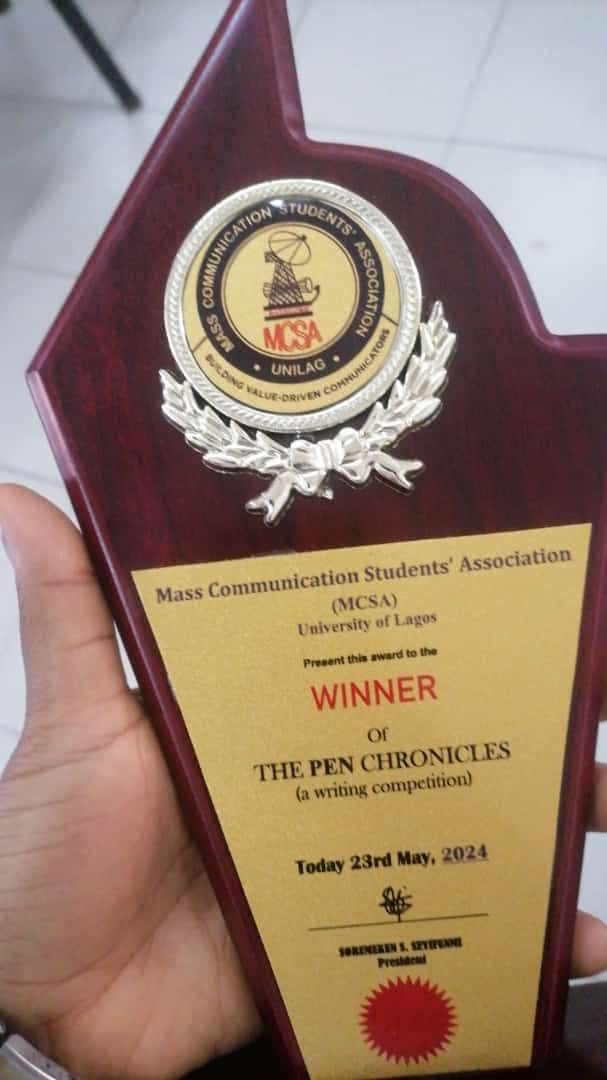
I broke my consistency streak last week, and it did not make me feel as bad as aI thought it would. My heart was quite heavy and I had no words to say.
Thankfully, I feel better today even as I look forward to my exams ending. I cannot wait for April when i finally get some time to myself. (I really don’t want to ghost but, why not?)
Until next time,
All my love,
Debs.